Buy geschenke-24.eu ?
We are moving the project
geschenke-24.eu .
Are you interested in purchasing the domain
geschenke-24.eu ?
domain@kv-gmbh.de · 0541-91531010
Buy geschenke-24.eu ?
Are salts polar?
Yes, salts are polar. Salts are composed of ions, which are charged particles. When salts dissolve in water, the positive and negative ions separate and become surrounded by water molecules, which are polar. This means that salts are able to conduct electricity when dissolved in water, as the charged ions are free to move and carry an electric current. **
'Salts or molecules?'
Salts are compounds formed from the reaction of an acid and a base, while molecules are made up of atoms bonded together. Salts are ionic compounds, meaning they are made up of ions, while molecules can be either ionic or covalent compounds. Salts have a specific crystalline structure and are often soluble in water, while molecules can have a wide range of physical properties and solubilities. Overall, salts and molecules are distinct types of chemical compounds with different structures and properties. **


Similar search terms for Salts
Top-Angebote
Products related to Salts:
-
DK Mary Berry Cooks Up A Feast - Favourite Recipes for Occasions and CelebrationsMary Berry Cooks Up A Feast In this extra-special updated edition of Mary Berry's popular entertaining cookbook, Mary makes cooking for gatherings of family and friends easy, with over 160 recipes that work well for both small and large numbers of guests. Lavish new photography and bonus festive recipes make this edition a precious self-purchase or an ideal gift for any Mary fan. You'll discover how Mary cooks for her family and friends during the Christmas party season, and for other occasions and celebrations throughout the year. Her timeless guidance and expert tips will help you cater smoothly and successfully on a small scale for dinners and lunches around a table, or on a larger scale for drinks parties, buffets and teatime. Adapting quantities is made easy. Recipes provide two sets of ingredients for serving either 6 or 12 guests, plus there is new advice on how to scale up recipes for any number. Discover tips for preparing in advance, simple shortcuts and stylish presentation ideas - and cook up a feast the stress-free way with Mary.11,99 £*Shipping: 2,99 £Secure redirect to the provider
-
Scholastic Official Harry Potter Advent Calendar: Official Advent Calendar - 24 Days of Christmas Surprises & Wizarding World GiftsCountdown to Christmas in this gorgeous advent calendar featuring enchanting illustrations inspired by the Harry Potter films. Have a magical Christmas with Harry Potter, Ron Weasley, Hermione Granger and all your other favourite characters from the Wizarding World in this official Harry Potter advent calendar. This gorgeous illustrated book unfolds to reveal 24 pockets – each with its own holiday surprise inside! From mini books and stickers to colouring sheets and holiday cards, there’s something for everyone. Return to Hogwarts with this advent calendar inspired by the films The perfect gift for kids, collectors and Harry Potter fans of all ages! Includes mini books, stickers and more, for hours of fun.8,70 £*Shipping: 2,99 £Secure redirect to the provider
-
Murdoch Books Made For You Summer By Sophie Hansen Recipes For Gifts And CelebrationsMade for You Summer - Recipes for gifts and celebrations Description This collection includes a pork and pistachio terrine; home-made rosemary crackers; a show-stopping cherry galette and a refreshing vanilla; peach and mint iced tea. With inspiring practical tips and beautiful photography throughout; this book is one of four in a collectable series; each not only full of gift ideas but a beautiful gift in itself.5,95 £*Shipping: 2,99 £Secure redirect to the provider
-
Klutz: Sew Mini TreatsMake your own felt food with fabulous faces. Includes instructions, patterns, and materials for more than 18 cheerful, itty-bitty food items as well as tips and tricks to customize your own designs. It's an instant recipe for fun!Comes with: 9...22,99 $*Shipping: 0,00 $Secure redirect to the provider




-
Which salts are the most hydrophilic, meaning water-attracting salts?
Salts that are composed of ions with high charge density and small size are typically the most hydrophilic, as they have a strong attraction to water molecules. Examples of such salts include sodium chloride (NaCl), potassium chloride (KCl), and calcium chloride (CaCl2). These salts readily dissolve in water due to their strong affinity for water molecules, making them highly hydrophilic. **
-
How are salts formed?
Salts are formed through a chemical reaction between an acid and a base. During this reaction, the hydrogen ions from the acid combine with the hydroxide ions from the base to form water, while the remaining ions combine to form a salt. This process is known as neutralization. Salts can also be formed through the evaporation of a solution containing dissolved ions, resulting in the formation of solid salt crystals. **
-
Aren't salts always white?
No, salts are not always white. Salts can come in a variety of colors depending on their chemical composition. For example, copper sulfate is blue, iron(III) chloride is yellow, and potassium permanganate is purple. The color of a salt is determined by the specific metal ions and anions present in its chemical structure. **
-
Why do salts not conduct electricity, while salts dissolved in water do?
Salts do not conduct electricity in their solid state because the ions are held in a fixed position and are not free to move. However, when salts are dissolved in water, the ions are separated and free to move around in the solution. This allows the ions to carry an electric current, making the solution conductive. **

Why do solid salts not conduct electricity, while salts dissolved in water do?
Solid salts do not conduct electricity because their ions are not free to move and carry an electric charge. In contrast, when salts are dissolved in water, the water molecules surround and separate the ions, allowing them to move freely and conduct electricity. This process is known as dissociation, where the salt breaks down into its constituent ions in water, enabling the flow of electric current. **
Why do solids salts not conduct electricity, while salts dissolved in water do?
Solid salts do not conduct electricity because their ions are not free to move and carry an electric charge. In contrast, when salts are dissolved in water, they dissociate into their constituent ions, which are free to move and carry an electric charge, allowing the solution to conduct electricity. This is because the water molecules surround and separate the ions, enabling them to move independently and conduct electricity. **
Top-Angebote
Products related to Salts:
-
Margaret Dabbs Thermasulis Organic Lavender Soothing Bath Salts 270gDesigned with your wellbeing in mind, Margaret Dabbs London ThermaSulis Bath Salts are packed with mineral goodness to soak away stress and help revive aching feet and legs. A therapeutic and purifying blend of Magnesium, Epsom, and Himalayan salts help to relieve tension, stressed skin, and aching muscles. Replenishing Sweet Almond oil with vitamins A & E helps to nourish the skin leaving it healthy, vibrant, and visibly more hydrated. Simply swirl into a warm foot spa or bath. Sit back, relax and delight your mind, body, and soul as you enjoy the benefits of ThermaSulis. Key Features: Promotes skin hydration, circulation and helps to relieve aching joints. Deeply nourishing, softening, calming skin conditioner. Contains Vitamin C which helps with skin brightness, gives a more even skin tone and promotes collagen renewal. Helps with muscle cramps, reduces water retention, and soothes tired feet. Vitamins A & E lock in moisture, nourish and help to relieve itchy, dry skin. Suitable for: diabetics, arthritis, eczema. Not suitable for pregnancy. CAUTION In case of contact with eyes, rinse thoroughly with clean water. Do not use on broken or irritated skin. Discontinue use if irritation occurs. Keep out of reach of children. Ingredients: *Sodium Chloride (Himalayan Salt and Sea Salt), Magnesium Sulfate (Epsom Salt), Magnesium Carbonate, *Lavandula Angustifolia (Lavender) Oil, *Silica, *Galactoarabinan, *Prunus Amygdalus Dulcis (Sweet Almond) Oil, *Sodium Ascorbyl Phosphate, **Limonene, **Linalool * Natural / Naturally occurring ** Natural constituent of the essential oil13,73 £*Shipping: 2,95 £Secure redirect to the provider
-
Scottish Fine Soaps Thistle & Black Pepper Bath Salts 500g Glass JarUpgrade your bath time routine with this glass jar of luxurious bath salts. For a bath that's never been so relaxing, plunge into the cool calm of a still loch at sunset as Epsom salts unknot tired muscles with this Thistle & Black Pepper bath salt. Added magnesium relaxes and revives your body every bath time. Ingredients Magnesium Sulfate (Epsom Salts), Magnesium Carbonate Hydroxide, Parfum (Fragrance), Aqua (Water), Glycerin, Silybum Marianum (Milk Thistle) Extract, Sodium Benzoate, Potassium Sorbate17,95 £*Shipping: 2,95 £Secure redirect to the provider
-
DK Mary Berry Cooks Up A Feast - Favourite Recipes for Occasions and CelebrationsMary Berry Cooks Up A Feast In this extra-special updated edition of Mary Berry's popular entertaining cookbook, Mary makes cooking for gatherings of family and friends easy, with over 160 recipes that work well for both small and large numbers of guests. Lavish new photography and bonus festive recipes make this edition a precious self-purchase or an ideal gift for any Mary fan. You'll discover how Mary cooks for her family and friends during the Christmas party season, and for other occasions and celebrations throughout the year. Her timeless guidance and expert tips will help you cater smoothly and successfully on a small scale for dinners and lunches around a table, or on a larger scale for drinks parties, buffets and teatime. Adapting quantities is made easy. Recipes provide two sets of ingredients for serving either 6 or 12 guests, plus there is new advice on how to scale up recipes for any number. Discover tips for preparing in advance, simple shortcuts and stylish presentation ideas - and cook up a feast the stress-free way with Mary.11,99 £*Shipping: 2,99 £Secure redirect to the provider
-
Scholastic Official Harry Potter Advent Calendar: Official Advent Calendar - 24 Days of Christmas Surprises & Wizarding World GiftsCountdown to Christmas in this gorgeous advent calendar featuring enchanting illustrations inspired by the Harry Potter films. Have a magical Christmas with Harry Potter, Ron Weasley, Hermione Granger and all your other favourite characters from the Wizarding World in this official Harry Potter advent calendar. This gorgeous illustrated book unfolds to reveal 24 pockets – each with its own holiday surprise inside! From mini books and stickers to colouring sheets and holiday cards, there’s something for everyone. Return to Hogwarts with this advent calendar inspired by the films The perfect gift for kids, collectors and Harry Potter fans of all ages! Includes mini books, stickers and more, for hours of fun.8,70 £*Shipping: 2,99 £Secure redirect to the provider
-
Are salts polar?
Yes, salts are polar. Salts are composed of ions, which are charged particles. When salts dissolve in water, the positive and negative ions separate and become surrounded by water molecules, which are polar. This means that salts are able to conduct electricity when dissolved in water, as the charged ions are free to move and carry an electric current. **
-
'Salts or molecules?'
Salts are compounds formed from the reaction of an acid and a base, while molecules are made up of atoms bonded together. Salts are ionic compounds, meaning they are made up of ions, while molecules can be either ionic or covalent compounds. Salts have a specific crystalline structure and are often soluble in water, while molecules can have a wide range of physical properties and solubilities. Overall, salts and molecules are distinct types of chemical compounds with different structures and properties. **
-
Which salts are the most hydrophilic, meaning water-attracting salts?
Salts that are composed of ions with high charge density and small size are typically the most hydrophilic, as they have a strong attraction to water molecules. Examples of such salts include sodium chloride (NaCl), potassium chloride (KCl), and calcium chloride (CaCl2). These salts readily dissolve in water due to their strong affinity for water molecules, making them highly hydrophilic. **
-
How are salts formed?
Salts are formed through a chemical reaction between an acid and a base. During this reaction, the hydrogen ions from the acid combine with the hydroxide ions from the base to form water, while the remaining ions combine to form a salt. This process is known as neutralization. Salts can also be formed through the evaporation of a solution containing dissolved ions, resulting in the formation of solid salt crystals. **
Similar search terms for Salts
-
Murdoch Books Made For You Summer By Sophie Hansen Recipes For Gifts And CelebrationsMade for You Summer - Recipes for gifts and celebrations Description This collection includes a pork and pistachio terrine; home-made rosemary crackers; a show-stopping cherry galette and a refreshing vanilla; peach and mint iced tea. With inspiring practical tips and beautiful photography throughout; this book is one of four in a collectable series; each not only full of gift ideas but a beautiful gift in itself.5,95 £*Shipping: 2,99 £Secure redirect to the provider
-
Klutz: Sew Mini TreatsMake your own felt food with fabulous faces. Includes instructions, patterns, and materials for more than 18 cheerful, itty-bitty food items as well as tips and tricks to customize your own designs. It's an instant recipe for fun!Comes with: 9...22,99 $*Shipping: 0,00 $Secure redirect to the provider
-
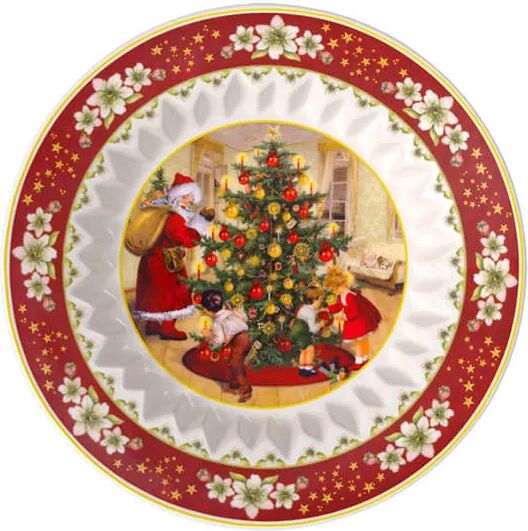
Villeroy & Boch Toys Fantasy Large Presents BowlThe Villeroy & Boch Toy's Fantasy Large Presents Bowl brings festive cheer to your dining table with its delightful Christmas design featuring Santa and a tree. Crafted from premium porcelain, this bowl showcases intricate detailing with stars and holly, making it perfect for serving festive treats during the holiday season. Its microwave-safe feature adds convenience, allowing you to easily reheat your delicious offerings. Whether it is placed on a dining table, coffee table or displayed on a mantlepiece, this bowl will perfectly compliment other pieces from the Toys Fantasy range. Made from premium Porcelain. Dimensions: 4.6(H) cm. Hand wash recommended. Microwave safe.28,71 £*Shipping: 3,50 £Secure redirect to the provider
-
Authentic Hotel and Spa Christmas Presents Hand Towel"Bring a joyful Christmas spirit to your decorations with elegant embroidered hand towels by Authentic Hotel and Spa for your guest bath. These ""Christmas Presents"" towels feature a sparkling applique tree with presents underneath."21,18 $*Shipping: 0,00 $Secure redirect to the provider
-
Aren't salts always white?
No, salts are not always white. Salts can come in a variety of colors depending on their chemical composition. For example, copper sulfate is blue, iron(III) chloride is yellow, and potassium permanganate is purple. The color of a salt is determined by the specific metal ions and anions present in its chemical structure. **
-
Why do salts not conduct electricity, while salts dissolved in water do?
Salts do not conduct electricity in their solid state because the ions are held in a fixed position and are not free to move. However, when salts are dissolved in water, the ions are separated and free to move around in the solution. This allows the ions to carry an electric current, making the solution conductive. **
-
Why do solid salts not conduct electricity, while salts dissolved in water do?
Solid salts do not conduct electricity because their ions are not free to move and carry an electric charge. In contrast, when salts are dissolved in water, the water molecules surround and separate the ions, allowing them to move freely and conduct electricity. This process is known as dissociation, where the salt breaks down into its constituent ions in water, enabling the flow of electric current. **
-
Why do solids salts not conduct electricity, while salts dissolved in water do?
Solid salts do not conduct electricity because their ions are not free to move and carry an electric charge. In contrast, when salts are dissolved in water, they dissociate into their constituent ions, which are free to move and carry an electric charge, allowing the solution to conduct electricity. This is because the water molecules surround and separate the ions, enabling them to move independently and conduct electricity. **
* All prices are inclusive of VAT and, if applicable, plus shipping costs. The offer information is based on the details provided by the respective shop and is updated through automated processes. Real-time updates do not occur, so deviations can occur in individual cases. ** Note: Parts of this content were created by AI.